Friday, October 7, 2016

Masculinity revisited

Some of you may recall my previous piece asking who gets to define masculinity, in which I argued that men who do not necessarily live up to Western standards of macho-ness are just as “manly” and physically attractive as their more conventionally masculine counterparts. As someone who opposes patriarchy, I find the rigid standards it imposes on all of us abhorrent, but for now, I want to discuss a particular way in which this system harms cisgender men. It is because of patriarchy that men are taught that they shouldn’t express emotion, that they should be hypersexual beings who objectify others, that they should dominate others, that they should assert their physical strength rather than their strength of character… and the list can go on forever.

But the horrific definition of manliness that patriarchy imposes goes much deeper. It seems to me that patriarchy upholds white masculinity as an ideal. That is one reason why, for example, Black and Latino men are fetishized, and Asian men are regarded as androgynous or asexual.

Consider the character of Raj Koothrappali on The Big Bang Theory.


Kunal Nayyar is, in my opinion, the best looking actor on the show—I’d go so far as to argue that he is the only attractive actor on the show—but his character has consistently been stereotyped and desexualized. For several seasons, he was incapable of speaking if a woman was even in the room, unless he consumed alcohol. 


In addition, there have been homophobic jokes throughout the series about his close friendship with Howard Wolowitz and his comfort with his female friends.


After Raj finally got a girlfriend, Emily, I have very few recollections of them being shown together in an affectionate or sexual manner. What I do remember are the following two instances of Raj being shown in a post-coital scenario: (a) when he wakes up next to an obese woman after a drunken night and (b) when he wakes up next to Penny, again after a night of heavy drinking, and he admits that they didn’t have sex because he ejaculated prematurely.

Anyone who has watched the show over the years might recall that many female characters have said that they find Raj physically attractive, including Howard’s wife Bernadette; yet the message from the writers contradicts this. Basically, more than making Raj an asexual character, the writers seem to have gone out of their way to mock any insinuation that Raj might be a virile heterosexual man. Meanwhile, Leonard and Howard have consistently been shown in the opposite light—often being depicted as oversexed. As the writers of the show are overwhelmingly male, one cannot argue that it is women imposing such ideas about masculinity on men; it is a patriarchal mindset that first and foremost influences how men view masculinity.

Sticking with the sitcom theme, consider the short-lived series Selfie.


This show was entertaining, and it was an important series because it featured an Asian actor as the romantic lead—something that remains unfamiliar on American TV. John Cho, known primarily for his roles in the Harold and Kumar movies and the contemporary Star Trek films, played a charismatic, successful marketing executive.


While the show seemed to have a following on social media, ABC chose to cancel it after 13 episodes. The show was very modern, as the title suggests, the writing was good, the acting was good; so what was the problem? There was even a petition to rescue the show. Sadly, Selfie’s fans had to let go before Henry and Eliza could officially get together.

So, once again, I question what this culture values in men. In my previous post, I had said that I’d never questioned Prince’s masculinity. He was certainly a pretty man, his mannerisms were perhaps not what one usually expects of a straight, cisgender male, and his art definitely suggested that he was sensitive.


Nevertheless, his testosterone and sexual attraction to women were palpable, no matter how he looked or what he was doing. It is common to hear that he “transcended gender”. He himself professed something similar to this in the song “I Would Die 4 U”: I’m not a woman; I’m not a man; I’m something that you’ll never understand. But what does it really mean to transcend gender? In my mind, this would imply truly embodying both femininity and masculinity, to the point where people don’t want to label you male or female but accept that you are something else that encompasses both or that so defies what we think about gender norms that it seems like neither. Where Prince was concerned, there was absolute consensus that he was a man. Reinforcing his identity as a heterosexual male, his desire for women was central to his music and stage performances. Here, his sensitivity was also apparent, as even when he sang about sex, he did not objectify women. 


The song “Gett Off” immediately comes to mind. In addition to highlighting consent and body positivity, it focuses on mutual pleasure. Indeed, Prince does not merely express a desire to get off but to get someone else off as well. The song is, thus, both literally and figuratively music to a woman’s ears. This message is diametrically opposed to the patriarchal idea of focusing on catering solely to the penis.

In my opinion, his gender bending was part of his identity performance. There was something far more political going on: Prince was challenging what we think a man is supposed to be—and, importantly, he was doing it as a Black man. This is something that seems to get overlooked in much of the discussion surrounding Prince’s persona, despite the fact that his activism is well-documented. Thus, to focus solely on his defiance of gender norms would do him, and us, a great disservice. When he adopted the unpronounceable “love symbol” as his name in the 1990s, it was an act of protest against his record label.
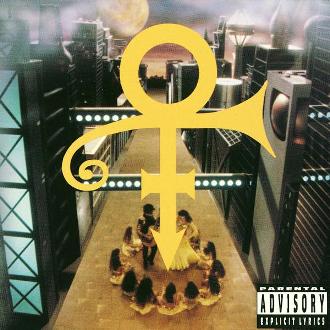


Warner Bros owned his name, so he changed it in a defiant assertion of his autonomy in an industry that loves to make money off of art created by Black people without actually valuing their blackness (and many of the consumers of said art feel much the same way). 


He would even appear on stage with the word “slave” written on his face to reinforce the constraints imposed on him and lack of respect from his record label.


Therefore, it would be wrong to focus solely on the gender neutrality of this symbol, which he abandoned as soon as his contract was up in 2000, and overlook all that he stood for—this proudly Black, unapologetically sexual, political, and beautiful man. 

Although we must always be careful not to idolize our stars too much, for what they choose to show us is marketed for us so we keep their career afloat, Prince was different from most of the capitalists working in his field because he challenged several dominant, oppressive systems.

Every achievement of anyone who doesn’t fit into the so-called mainstream is a revolutionary act. As part of the fight against patriarchy, let us be aware of, and denounce, insidious Eurocentric notions of beauty and gender that tell racialized people they are inferior.

Tuesday, September 6, 2016

City for Sale


After this land was taken from its Indigenous inhabitants, it would eventually become home to labourers in the steel industry, who went on to have families and buy homes. This expanded the population and created opportunities for a growing public sector. Hamilton, Ontario has also long been home to large numbers of immigrants and refugees, with about one quarter of the population being foreign born. This is a diverse city whose inhabitants come from many different socioeconomic, ethnic, linguistic, and religious backgrounds. But it looks like the architects of the future of Hamilton have another far more homogeneous image in mind.


(Source: The Spectator)

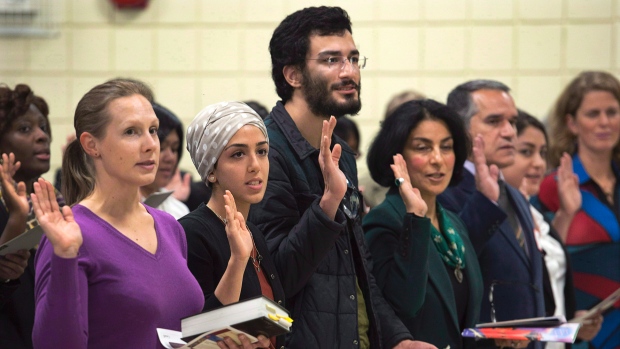
New Canadians (Source: CBC)

Everywhere you turn in the Hamilton core, you see either the construction of a condominium complex in progress or signs marking the sites of future condominiums. And this city, once looked at with a hint of disdain as Ontario’s Steeltown, has over the last few years become known for its trendy restaurants and cafés. Yep, we’ve been rebranded! Hamiltonians have been forced to move aside to make way for the hipster and monied Ontarians to reclaim this territory.


Gentrification is a term associated with the renewal and reconstruction of deteriorating areas, accompanied by a replacement of people of a low socioeconomic status with more affluent people. Except, what if the area being “gentrified” isn’t actually deteriorating? Wouldn’t this process just be an example of colonization?

Plan for The Connolly at the site of the former James Baptist Church, with the church façade retained

For many years, it was well-known that Hamilton offered much lower rents and property rates as compared to the Greater Toronto Area. The catch of relocating, however, was that you were unlikely to get a job in this city. But that was okay, because the commute to downtown Toronto is only an hour long. Despite the influx of well-off home buyers, however, Hamilton’s labour force is still dominated by blue collar workers. I’ll sum up our economy in four words: steel, health, construction, food.

If you’re an entrepreneur with a unique business idea, you might have a chance, unless your shop is located in a trendy area and the owner of the building decides it’s time to make way for yet another hipster bar or bistro. This has been the modus operandi on Hamilton’s famed Locke Street for years now. 

Locke Street South (Source: Urban Toronto)

We have seen many businesses open and close on this street over the years, and I personally know two successful business owners who were given the heave-ho by their landlords. Locke Street today is lined with expensive cars and an overwhelmingly white clientele. Interestingly, while some of the shops that had been there for decades, like the Locke Street Bakery (now relocated), have been replaced, other properties remain vacant with “For Lease” or “For Sale” signs in their windows. 

Before (Source: HomesinHamiltonOntario.com)
After (Source: Jackie Guanzon)

One sees customers walking up and down Locke holding takeaway coffee cups—usually from Starbucks, even though there are several other independent cafés to choose from—but the stores are usually not teeming with shoppers. As I was walking down Locke recently, I simultaneously passed a vacant shop and a group of blonde-haired women, expensive beverages in hand, discussing their lovely weekend at the cottage. It seemed like an apt representation of what’s happening: A certain class of people dominate the area, but they seem more interested in buying the image Locke Street is selling than any goods the shopkeepers might have to offer. This once thriving neighbourhood looks to me like it might implode.


As a renter in Hamilton, I have seen myself become rapidly priced out of the market in the city. In 2011, two-bedroom apartments were renting between $745 and $850 per month; today, these same units are between $910 and $1,200 per month. Moving is not an option. And my building is now on its third owner since I moved in, because there is lots of money to be made in the Hamilton real estate market. Meanwhile, the tenants are left with no real property management and landlords who try to encourage you to leave, since they can charge a new tenant anything they want, while they can only legally increase your rent by a small percentage annually.

I read an infuriating Toronto Star article the other day, written by a so-called real estate reporter—or a marketer for the real estate industry masquerading as a columnist? The article, titled “Hamilton is having its moment: But the days of a cheap, two-storey Victorian may be gone”, is a blatant call to Toronto buyers to scoop up what they can while there are still some spoils to be had. And while this campaign is not new, something about it doesn’t sit well. This article reminded me a lot of the Tata Housing ads in Goa that I, and others, have complained about before.


Once again, I see a connection between Canada and Goa, this time in my hometown. In the case of Hamilton, however, the message is not that the affluent investor deserves a piece of Paradise, as no one would realistically discuss this city in such terms. While the message remains one of entitlement, it is entitlement to something basic that Torontonians have been taught they don’t deserve—an affordable home of more than a couple hundred square feet with outdoor space.

 Downtown Toronto: Condos, condos, and more condos!

Hamilton, where you can still find affordable detached homes and green space

But, similar to the situation in Goa, the message to the people who already live here is that we are on a hot commodity that we don’t deserve. Also similar to the situation in Goa is that this in-migration does not appear to be ushering in an abundance of job creation. Perhaps our respective politicians remain hung up on the fiction of trickle-down economics—cater strictly to the wealthy and they’ll create vast employment. There are likely requirements for more domestic labour and child care services as a result of the real estate boom in Hamilton, as people spend more time commuting and less time at home, but there are few medium and large private sector businesses setting up shop.


In Goa, at least, the infrastructure is still missing, whereas it is present here—so, what is Hamilton’s excuse?

What exactly do we mean when we throw around words like “growth” and “development”? Buildings are constructed, highways are expanded, new restaurants, coffee shops, and bars open up… Okay, so, investors put in money to make more money, and one would hope the labour force used to create and maintain this “development” is also compensated… What’s in it for the vast majority of us? We inhabit a world of mass consumption and minimal production. For a few years, it looked like all Canadians were doing was passing their time shopping, but even that has changed, as evinced by all the retailers who’ve closed their doors. Our Prime Minister keeps referring to the “middle class and those working hard to join it”. How many private sector workers are in this group, and how many who are struggling will actually achieve this status? And what is the message, really? That those who are not at least middle class are unworthy of the same facilities as those with money?


As I always say, it is the people who make a place. Colonizers whose role is to consume resources and add only money do not make a place warm and beautiful. Just as I argue that newcomers to Goa must appreciate that they are in a wonderful place inhabited by real, fascinating, gracious people who are worth knowing and deserving of respect, I now argue that newcomers to Hamilton must recognize that this is not some vacant land waiting for them to come and revitalize it. Parts of the city had been neglected, but the city was not falling into disrepair before the real estate boom started. Efforts that were being made to make the city more vibrant were initiated by people whose hearts were invested in this city. Now some of those same people are being gentrified out, and for what?

The view of the city from Sam Lawrence Park on the escarpment, also known as the Hamilton Mountain (Source: mapio.net)

Hamilton harbour (Photo mine)

Revellers on James Street North (Little Portugal) celebrating Portugal's Euro 2016 win


Thursday, August 11, 2016

Erasure

During the Republican National Convention in the U.S., Donald Trump set my social media feeds ablaze with comments from well-meaning liberals pointing out the irony of his choice of music. They argued that Trump had committed a faux pas by using the Queen song “We Are the Champions”, not because he had yet again used music without permission but because Queen’s frontman, the late Freddie Mercury, was gay. But here’s the problem: Freddie Mercury never professed to be gay. As far as anyone knows, Freddie Mercury never identified as gay. Indeed, he had relationships with both men and women, and the song “Love of My Life” was written about Mary Austin, a woman.

For some people, this matter might be insignificant: “Gay, queer, bi… whatever; you know what I meant.” But, for me, this highlights the bigger issues of bisexual invisibility and erasure—when bisexuality is ignored or dismissed because it is not seen as a real or valid sexual identity.


Freddie Mercury was a flamboyant performer [tick]; he was known to have had affairs with men [tick]; and he died of AIDS-related complications [tick]. This information is enough for some people to feel entitled to define him and assign him to the “gay” box. But if Mercury himself never said that he was gay, what right do we have to do it on his behalf? Now, I realize that he never came out as bisexual either, but the semantics relating to sexuality are still evolving, and the closest term we have to describing a person who has loved and had sex with people of multiple genders is “bisexual”. It is important to note that Freddie Mercury was not very political and he was not interested in discussing how he defined his sexual orientation with the press. That was his right, as it is everyone’s right to decide how to self-define and whether to share this in the public domain.

As Shiri Eisner points out in the book Bi: Notes for a Bisexual Revolution (2013), the most popular belief about bisexuality may be that it simply doesn’t exist. This “creates the impression that bisexuality doesn’t appear in popular culture (or indeed anywhere) because it really doesn’t exist. This also causes people to ignore (erase) bisexuality where it does appear for that very same reason. (What you know is what you see.)” (p. 37; emphasis mine). In other words, everyone else gets to define a person’s sexuality on the basis of what they feel they know about them.

Not everyone who is bisexual or otherwise nonbinary comes out, or possibly can, in the same way that people who are gay or lesbian do. Ask anyone who has tried it and you will hear stories about being told some of the following:
“You’re just going through a phase.”
“Pick a side!”
“You’re greedy!”
“If you haven’t slept with a guy and a girl (or sometimes, if you haven’t had relationships with both guys and girls), how can you know?”

So, coming out can be met with doubt. And usually, once a bisexual does have relationships out in the open, their sexual orientation will be defined according to whom they’re with (again, as Eisner states, “What you know is what you see”). This revolves around the patriarchal notion that the penis rules all. That is, one’s sexuality is defined according to one’s proximity to the phallus. Think for a second about the term “gold-star lesbian”—that is, a woman who identifies as lesbian and has never slept with a man, as if that somehow makes her “purer” than a woman who has slept with a man, or multiple men. Accordingly, if a bisexual woman is dating a man, she will be defined as heterosexual, and maybe as someone who occasionally has sex with women, but probably as a performance she puts on to arouse heterosexual men, whereas if a bisexual man is dating a man, he will be defined as gay, and any attraction that he has to women will be overlooked.

Often, what comes after doubt or denial is suspicion. Many people feel threatened by bisexuals because they equate bisexuality with promiscuity and assume that a bisexual could potentially want anybody and, therefore, could never commit to a monogamous relationship. While it is important to acknowledge that everyone has a right to sleep with as many or as few people as they want to, and embrace or reject the idea of monogamy, it is insulting to decide that someone who is attracted to multiple genders is going to sleep with every single person they encounter and cannot be trusted to remain faithful in a relationship.

Given these responses to bisexuality/nonbinary sexuality, is it any wonder that there are people who choose not to disclose their orientation?


Monosexism assigns everyone to one of two permissible categories—straight or gay—depending on how we project our sexuality. Thus, monosexism and patriarchy are closely connected; the latter restricts behaviours, roles, and attractions, so the former can identify how to categorize them. These two identities are easy to define, recognize, and police. This has become blatantly obvious in the contemporary “acceptance” of homosexuality in many countries, mostly in the West. By “acceptance”, I do not mean to imply that homosexuality is encouraged or even acknowledged as valid in the way that heterosexuality is. Rather, because it can be identified and because much of the struggle of the privileged homosexuals has been about proving that they are “normal” and deserving of operating within the heteronormative world, it is now allowed under certain conditions.

This is where homonormativity plays a crucial role. I have written about the concept of homonormativity before. Homonormativity mirrors its cousin, heteronormativity, adopting the dominant model that upholds the same values of patriarchy, hypermasculinity, monogamy, family, capitalism, and whiteness that constitute the foundation of heteronormativity, and imposing them on queer people. I can’t accurately use the acronym LGBTQ here, as the existence of bi, pan, trans, etc. people continues to challenge this model—and I hope this continues to be the case. Homonormativity is used to police queer people’s behaviour and choices, to admonish them for not living acceptably—for not being more like upper- and middle class, white, cisgender, conservative, straight people. In this context, the concept of “straightness” extends beyond sexual orientation and can be attributed to the way some fine, upstanding, “normal” homosexuals live their conventional lives. Think of the idiom the straight and narrow. This separates homosexuality from queerness, and unlike homosexuality, queerness is not permissible, as it continues to pose a threat to the oppressive social order that some privileged gays and lesbians have fought to maintain.


This is why it is so critical that we not allow one dominant group to speak on behalf of LGBTQ+ people. We don’t all come from the same background and we don’t all face the same issues. But we do all have a responsibility to listen to each other and challenge our own issues with internalized homophobia, biphobia, transphobia, etc. I walk a fine line between wanting to advocate abandoning labels and wanting to claim sexuality as an important part of one’s political identity, which can require naming it. But I also believe that everyone should have the right to define who they are for themselves and should be able to choose whether or not to share that information. This is very easy for those who identify as heterosexual. The model is set before they enter the world, and their family and society will naturally assume that they will fit into this model. For others, the family and society will make the same assumption, but the outcome won’t be so easy. Even still, some who struggle with being “different” will find their path because, as I said, homosexuality is increasingly gaining recognition as an actual thing, so if one can comfortably identify with gayness, it will make self-definition more straightforward, not just for the gay or lesbian individual but also for everyone else who wants to understand what that person is.

And everyone wants to understand what people are. The problem is that our understanding of what people can be is so incredibly limited.

Monday, July 25, 2016

Learning from Goa

As I have stated before, my relationship with Goa and time spent interacting with and observing the Goans has made me rethink and reinterpret my identity as a Canadian and what Canada is. 

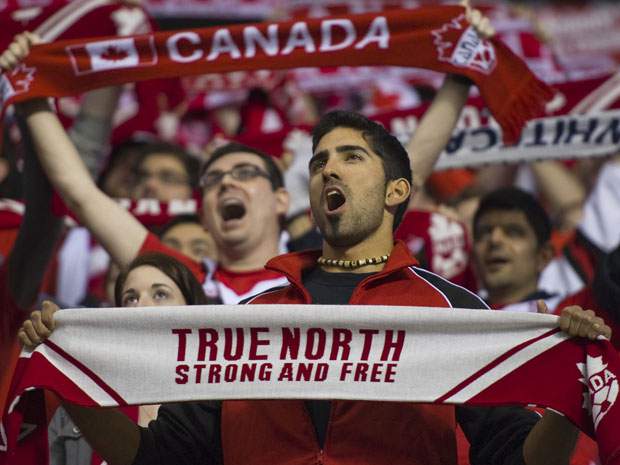
Over the years, I have become progressively disenchanted with any display of nationalism. During childhood, we are all made to learn the words to our respective national anthem and sing it on cue, and participate in rituals connected to holidays intended for patriotic celebration. Growing up in Canada, we had to stand for the national anthem (O Canada) in school every morning. As a music student, I and my fellow concert band-mates were also made to play O Canada for the school on many occasions. One Remembrance Day, in secondary school, God Save the Queen was added to the set list, effectively forcing us to pledge allegiance not only to the idea of Canada but also to the monarchy that continues to enjoy the status of our country’s official ruling power. And this is something that our government asks of new Canadians. Yet some are availing of their legal right to disavow their oath to the Queen and her descendants.

The monarchy is becoming increasingly irrelevant to us. And this is where I see hope for this country. While we have just begun to take steps toward finally acknowledging the genocide and other heinous abuses committed against the Indigenous peoples of what we call Canada, we have a very long way to go. 

So much is not talked about in this country. For example, we have yet to truly acknowledge that slavery existed in Canada. 

But perhaps as more people immigrate to this country from every part of the world, we can overcome the deeply racist conception of what it means to be Canadian and welcome deeper political participation from people from various backgrounds.

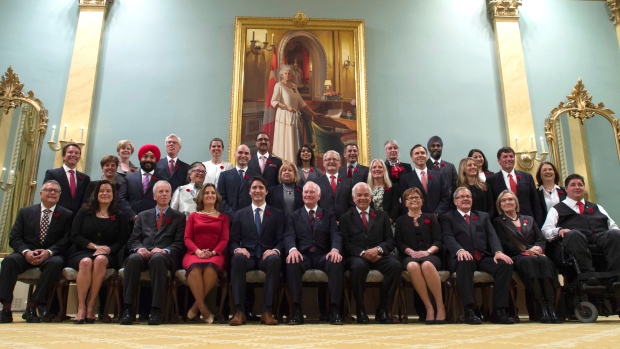
Some will undoubtedly argue that we are already doing this, as the current Liberal Cabinet has two Indigenous Canadians, an Afghan Canadian, and four Indo-Canadians. When the Cabinet was formed in 2015, many Canadians agreed with the Prime Minister’s assertion that he had chosen a Cabinet that “looks like Canada”.

However, some Canadians, such as myself, were crying foul. Most glaringly, there was not even one Black Canadian in the Cabinet. Numerous articles were written on the subject (see, e.g., Rachel Décoste’s article) and debates were had on social media. These debates were intriguing in their inconsistent logic. The Prime Minister had announced much before that his Cabinet would comprise 50% men and 50% women. Not surprisingly, this prompted outcries in print and television media that Trudeau was going to tamper with the meritocracy! Then when the induction occurred and the public saw the credentials of the Cabinet Ministers, this rhetoric dissipated. But when those of us who saw something was amiss with the representativeness of the Cabinet spoke out, we were accused of wanting to interfere with the meritocracy! Some lazily argued that perhaps there just weren’t enough Black, Asian, Arab, North African, Iranian, etc. Canadians in the Liberal caucus for the Prime Minister to choose from. But a quick glance at the list of elected Liberal MPs was all it took to refute this argument. Further, as I pointed out then, all four Cabinet Ministers of Indian ancestry are members of Canada’s Punjabi Sikh community; therefore, they do not even reflect the diversity of Indo-Canadians.


Indeed, I still maintain that the Cabinet reflects an ignorance (perhaps even a racist notion) of what diversity means. This is not to say that the Cabinet Ministers are unqualified for their positions; on the contrary. The problem in relation to the discussion surrounding the Cabinet was all the self-congratulatory back-slapping of the Liberal Party.

They boasted that this was the most diverse Cabinet Canada had ever seen, when in fact, as Rachel Décoste pointed out, the former Conservative Cabinet had actually set the bar for representing Canada’s multicultural character. 

Perhaps it was that Canadians were paying closer attention, given Trudeau’s promise of change. Or perhaps it was that Trudeau’s team simply looked more different to some people. Whatever the reason, such felicitation over the composition of the Cabinet suggests that any person of colour can speak for all people of colour—thinking that effectively others everyone who isn’t white.


Celebrating the nomination of four Indo-Canadians to Cabinet whose ancestors can be traced to the same part of the Indian subcontinent is interesting to me because it suggests that there is some monolithic Indian identity. But as anyone who has ever lived in South Asia knows, there is tremendous diversity among its inhabitants (infinite languages and dialects, various religions and traditions within the same religion, varying dietary habits, etc.). Such thinking is evident here when someone born in Canada meets a Goan Catholic, for example, and is puzzled as to why he or she has a Portuguese-sounding name. After all, this contradicts the image of Indianness that has been framed in Canada (Aren’t all Indians either Hindu or Sikh and have surnames like Patel or Singh?).


I see parallels in this idea of a uniform Indianness when I’m in Goa too. It’s no secret that there is heavy nationalism at play throughout India right now. India is a beautiful and fascinating country; no two places are really alike. This is both where the country’s strength lies and where it poses a challenge to those who want to concisely define this landmass and the people who live on it—which invariably takes the shape of a North Indian identity. Besides physically inhabiting the territory called ‘India’, what do the citizens of India have in common? One can ask the same question about Canada. Owing to its history, Canada seems to be in perpetual need of defining itself. Similarly, since its annexation to India in 1961, Goa has been under pressure to define itself in connection with the mainland. Undoubtedly, this pressure to self-define would date back even further, but let’s deal with the present day for now.


The complexities of Goa are such that I feel I’m still unravelling and only starting to understand them—a decade-and-a-half after my first visit. While the perspectives of the Goans are numerous, in everyday conversation about what is happening and what the future should bring, the following three voices seem to ring the clearest: (1) those who are caught up in nostalgia, (2) those who have a strong sense of Indian nationalism, and (3) well-meaning types who lament the loss of the natural environment and the character of the place they remember, but who aren’t necessarily prepared to disrupt the status quo to stop this process. I believe that none of these three perspectives is helpful. They all overlook the greater problem that an external ideology is being imposed on Goa. Indeed, I would argue that one of the issues holding Goa back is the desire for a saviour—more specifically, an external saviour. 

I see it in all three of the aforementioned perspectives (e.g., the Portuguese vs. Congress–BJP vs. Arvind Kejriwal and a Delhi-centred AAP). I rarely hear calls for Goans to unite and shape the future of the state together. This may be the result of a long history of division among the people (for a clear, succinct explanation of these divisions, see e.g. Raghuraman S. Trichur’s book Refiguring Goa: From Trading Post to Tourism Destination). Such a lack of unity can do nothing but enable the ongoing destruction of the environment and physical and psychological colonization.

I had a heated discussion with an AAP volunteer in May, when we were both in attendance at the same gathering in Panjim. She was singing Arvind Kejriwal’s praises while criticizing the BJP’s Hindu nationalist ideology. I opined that the lack of a strong local voice in AAP’s Goa wing was a problem, especially since Kejriwal had recently addressed the crowd at the AAP rally in Panjim in Hindi, using overtly Hindu nationalist language, including the phrase ‘Bharat mata ki jai’ (‘Victory to Mother India’). Whether you do or do not take issue with this slogan, it is significant for a politician from Delhi to come to Goa and say such a thing. Some others mentioned that he hadn’t spoken in Konkani; this, I think, would be unreasonable to expect, but it would not have been difficult for him to at least greet the crowd in English. He chose not to. 

I asked her what reassurance she had that Kejriwal doesn’t espouse the Hindutva ideology himself. The exuberant AAP volunteer told me that she just knew in her heart that Kejriwal was trustworthy. She went on to ask me if I’m Goan. When I told her that I am not, she lost interest in continuing the conversation and walked away.

I’m aware of the strange position I’m in as an outsider urging the Goans against seeking deliverance from an outsider. My position is similar in the context of my own country, as a white Canadian who is eager for the dismantling of the system of whiteness that controls everything. In fact, my position as an insider–outsider in Goa has not only helped me understand my privilege in Canada and as a Canadian in the world but also the role that I can play in working towards deconstructing this system as well as in challenging Canadians’ rigid ideas about Indianness. So, similarly, my purpose in writing about Goa is in shining a light on things as I see them from this particular position, without claiming to have the answers.

Identity is not just a project of the individual; belonging is also integral to this formation. The myth of the uninhabited land is crucial to colonization; the erasure of the locals and their identity allows the colonizer to use that land as he sees fit. Thus, when we operate solely as individuals, this disconnects us from each other and makes erasure possible. This has become clear to me during my time in Goa, and I see similar workings in the exclusion of Black Canadians and many others from power in Canada and from the Canadian identity.

What does it mean to be Goan? If this question goes unanswered, it will cease to be relevant, because another identity will be imposed on Goa. And as for Canada, I think many of us will agree that we still have work to do to figure out who we are.


Saturday, July 2, 2016

Over the rainbow

I ponder the issue of identity a lot, and throughout Pride month, I was thinking in particular about the issues of representation and inclusion/exclusion within the LGBTQ community. I must confess that I’ve never attended a Pride parade. In general, I’ve never derived pleasure from watching parades, and I don’t like crowds. More importantly, the so-called community has never felt like a completely inclusive one to me. My introduction to this space was in university. It seemed very white and representative of very specific identities—namely, people who identified with either the ‘L’, ‘G’, or (less so) ‘B’ in the acronym LGBTQ. Thankfully, that acronym has been expanding over the years to acknowledge the existence of different identities. To the best of my knowledge, it is currently LGBTQQIP2SAA (lesbian, gay, bisexual, transgender, queer, questioning, intersex, pansexual, two-spirit, asexual, and ally), sometimes referred to as ‘Alphabet Soup’ owing to its length.

But not everyone is eager to eat this soup. If you think homophobic heterosexuals are a problem, you might be surprised to learn how rampant racism is in the LGBTQ community and how frequently same-sex attracted people dismiss and promote the erasure of different sexual and gender identities. I suspect we’ve all been guilty of assuming that someone is gay because they’re attracted to someone of the same sex or of questioning the identity of a bisexual who is dating a person of the opposite sex or of being insensitive to someone’s gender identification. But it is crucial to learn from this and be more aware, more receptive, more understanding, and more respectful. I was appalled the other day when I read the comments on an article about this acronym. Rather than supporting the recognition of the various sexual and gender identities, people were complaining about how unnecessarily complicated it is—that people should just identify as queer if not lesbian, gay, bisexual, or transgender. In one of these comments, a woman derided those who want to expand LGBT and suggested that anyone who doesn’t identify with one of these terms should ‘figure it out, like [she] did’.

From this perspective, one might deduce that only three sexual orientations exist: heterosexual, homosexual, and bisexual. But it actually gets worse, as bi erasure and invisibility within the so-called community are common. Ask any bisexual and you will hear stories about being told to pick a side. So, what many people actually feel is that only two legitimate sexual identities exist: straight and gay. This ignores the countless people who occupy the enormous space between these two ends of the sexuality spectrum and denies their right to self-define.

While reading up on Toronto Pride, I stumbled upon an article titled ‘Why are we erasing LGBT people from our own community?’ I assumed that it would be about how we overlook the identities of our fellow queer people. On the contrary, the article is critical of people who identify as anything other than gay, lesbian, bisexual, or transgender. The author—a white male—complains about Pride Toronto’s mission to ‘[bring] people together to celebrate the history, courage, diversity and future of our community’. I agree with him that ‘celebrating’ and not ‘demonstrating, promoting, and demanding rights and equality’ is a failure on the part of the organizers, but I was disappointed that despite this critique, he doesn’t get into a discussion about this. What I cannot agree with is his criticism of the use of the ambiguous terms ‘people’ and ‘community’. Unlike him, I commend Pride Toronto for acknowledging that not everyone identifies with ‘LGBT’, and I agree with the organizers that dropping this signifier promotes more inclusion. The author, however, argues that the terms lesbian, gay, bisexual, and transgender are ‘all-encompassing’, and thus those who do not identify with one of them are manifesting internalized homophobia or transphobia. That is one very privileged viewpoint!

How can a sexual minority demand recognition of their sexual identity and deny others the same right? If we truly believe that everyone should have equal rights, we must reject the dominance of the white, cisgender, homosexual, middle class identity within the rainbow. It promotes a homonormativity that aligns dangerously with a capitalist culture that thrives on oppression. This is why many people of colour don’t identify as gay or lesbian, despite being attracted to members of the same sex. Furthermore, the corporatization of Pride that complements this homogenization of the queer identity excludes and deters people who might otherwise want to celebrate.

 (Noah Berger/Reuters)

As a Huffington Post blogger states, he chooses not to attend Pride because ‘it’s for those members of the LGBT community who are the best customers for the sponsoring brands and who fit an image of lithe, young, white male gayness’. A look at Pride Toronto’s sponsors this year is telling: several alcohol companies, Viagra (known to be used recreationally), TD Bank, Manulife Financial, Eska Water, Smart… The target market is clearly affluent inhabitants of metros, who like to party. Yep, ‘lithe, young, white male gayness’ sounds accurate.

This celebration of capitalism in addition to the increased police presence is why individuals and groups, like Black Lives Matter, opted out of San Francisco’s Pride celebrations this year.

(Mel Evans/Associated Press)

Anyone who can feel comfortable and safe in the presence of heavily armed police is clearly privileged enough not to be suspicious of law enforcement, is unfamiliar with the history of the LGBTQ rights movement and the initiation of Pride, and is disinterested in the ongoing history of discrimination and violence that people of colour are facing at the hands of police. And, like me, they’ve probably been lucky enough not to have had to do any real work for the cause, because so many have already fought and/or lost their lives fighting for their basic right to be regarded as human and non-criminal. Pride appears to be a battleground between those who see identity as political and those who do not.

Like white feminism, we seem to have a white homosexuality problem, where white people lead the movement and are satisfied when they make progress and are okay with leaving everyone else behind. This is perhaps best exemplified by the struggle for marriage equality that does nothing to mitigate or eradicate pressing issues such as laws that allow for discriminating against people on the basis of their sexual or gender identity, the continued brutalization and murder of trans women of colour, homelessness among queer youth, the high rate of domestic violence that bisexual women face, etc. Of course, this is not to say that I oppose same-sex marriage. I only wish that those who’ve fought for that right would also pursue securing the rights of others, who continue to fight for their very survival. Until your LGBT rights encompass the rights of all sexual and gender minorities, what is there to be proud of?